Editorial: New beginnings
Professor Leon Davies FCOptom introduces the latest edition of Optometry in Practice in his new role as Editor-in-chief.
It gives me great pleasure to introduce this issue of Optometry in Practice as the journal’s new Editor-in-chief. That said, on behalf of the journal, I would like to extend my sincere thanks and appreciation to Professor Steve Parrish, Optometry in Practice’s outgoing Editor-in-chief, who skilfully led the journal since its inception.
Readers of Optometry in Practice will also be aware that the journal has recently moved to an online-only format. Against the cyclorama of challenges and developments faced by our profession, the change in Optometry in Practice’s format offers an exciting opportunity for more innovative content, and will allow the journal to continue delivering CPD material that is relevant, rigorous and research-led. We hope that our readers will continue to find Optometry in Practice stimulating and their go-to reference for evidence-based practice.
The first paper of the current issue assesses the agreement between the management decisions made by specialist trained glaucoma optometrists and a consultant ophthalmologist within a hospital-based glaucoma clinic. Bailie and colleagues describe their service evaluation audit of 58 patients using a virtual clinic setting. The authors conclude that optometrists appear to have a satisfactory level of clinical decision-making ability in the context of a glaucoma clinic.
Whilst the early stages of keratoconus can be managed with spectacles or contact lenses, more advanced presentations of the condition often require invasive procedures. Although the advent of corneal cross-linking has seen a reduction in the need for surgery, in very advanced cases a corneal transplant may be the only viable treatment option. In their case report, McVeigh and Hau from Moorfields Eye Hospital present details of a keratoconic patient who developed an Alternaria keratitis infection following a penetrating keratoplasty. The authors go on to discuss the risk factors, clinical characteristics, treatments and the use of in vivo confocal microscopy in the diagnosis of fungal keratitis.
Assessing the impact of ocular disease on a patient’s quality of life can be difficult using standard optometric techniques. In his review, Williams provides a discourse of validated questionnaires designed to capture patients’ quality of life: patient-reported outcome measures (PROMs). The paper outlines what PROMs are, how to select the appropriate PROM for a specific purpose and how they could be used in optometric practice.
The final paper in this issue by Vinuela-Navarro outlines the importance of appropriate eye movement control in children, and describes the typical characteristics of fixational, saccadic and smooth pursuit eye movements, and their development during childhood. The paper also provides an introduction to the different eye movement characteristics found in children with learning difficulties, and describes and discusses the clinical techniques currently available to evaluate fixations, saccades and smooth pursuits in optometric practice. Recommendations to support optometrists when assessing eye movements in children are also suggested.
Finally, as this is the last issue of 2018, I would like to take this opportunity to thank our editorial board members and our anonymous peer reviewers for their invaluable input and expertise in appraising all papers submitted to and published by Optometry in Practice; your support is very much appreciated.
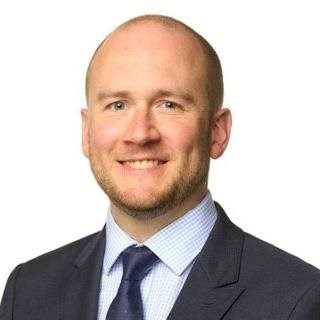
Author(s)
Professor Leon Davies PhD BSc(Hons) FCOptom Prof Cert Med Ret
Professor Leon Davies is Professor of Optometry & Physiological Optics at Aston University, and Chair of the Board of Trustees of The College of Optometrists. Since joining the College's governance structure in 2015, he has served as Chair of the Research Committee, Vice President, President, and now Chair of the Board of Trustees, whilst also currently chairing the College's Governance Group. A GOC-registered optometrist, Fellow of The College of Optometrists, Liveryman of the Worshipful Company of Spectacle Makers, and Fellow of the American Academy of Optometry, he has made sustained contributions to advancing the profession through leadership, research, education, and clinical service.
Professor Leon Davies PhD BSc(Hons) FCOptom Prof Cert Med Ret
Professor Leon Davies is Professor of Optometry & Physiological Optics at Aston University, and Chair of the Board of Trustees of The College of Optometrists. Since joining the College's governance structure in 2015, he has served as Chair of the Research Committee, Vice President, President, and now Chair of the Board of Trustees, whilst also currently chairing the College's Governance Group. A GOC-registered optometrist, Fellow of The College of Optometrists, Liveryman of the Worshipful Company of Spectacle Makers, and Fellow of the American Academy of Optometry, he has made sustained contributions to advancing the profession through leadership, research, education, and clinical service.
At Aston University, Professor Davies has held senior leadership roles including Director of Research, and Dean of Optometry. He has also supported the development of future optometrists and clinician scientists through external examining roles in the UK, Europe, Australia and Singapore. His research focuses on presbyopia and restoring ocular accommodation to ageing eyes, and he has published widely securing substantial competitive funding to support this work.
Alongside his academic endeavours, Professor Davies has played an active role in advancing optometry through professional leadership, editorial contributions, and public engagement. He has served as Clinical Editor of Optometry Today, Editor-in-Chief of Optometry in Practice, and on the editorial board of BioMed Research International. In 2022, he was Optometry Clinical Lead at the Commonwealth Games, and he co-created Villa Vision, an innovative mobile eye care service developed with Aston Villa FC Foundation and Essilor Vision for Life to improve access to eye care in the community. His contributions have been recognised through various awards including the inaugural Neil Charman Medal and a Times Higher Education Award for Outstanding Contribution to the Local Community.
Professor Leon Davies is Professor of Optometry & Physiological Optics at Aston University, and Chair of the Board of Trustees of The College of Optometrists. Since joining the College's governance structure in 2015, he has served as Chair of the Research Committee, Vice President, President, and now Chair of the Board of Trustees, whilst also currently chairing the College's Governance Group. A GOC-registered optometrist, Fellow of The College of Optometrists, Liveryman of the Worshipful Company of Spectacle Makers, and Fellow of the American Academy of Optometry, he has made sustained contributions to advancing the profession through leadership, research, education, and clinical service.
At Aston University, Professor Davies has held senior leadership roles including Director of Research, and Dean of Optometry. He has also supported the development of future optometrists and clinician scientists through external examining roles in the UK, Europe, Australia and Singapore. His research focuses on presbyopia and restoring ocular accommodation to ageing eyes, and he has published widely securing substantial competitive funding to support this work.
Alongside his academic endeavours, Professor Davies has played an active role in advancing optometry through professional leadership, editorial contributions, and public engagement. He has served as Clinical Editor of Optometry Today, Editor-in-Chief of Optometry in Practice, and on the editorial board of BioMed Research International. In 2022, he was Optometry Clinical Lead at the Commonwealth Games, and he co-created Villa Vision, an innovative mobile eye care service developed with Aston Villa FC Foundation and Essilor Vision for Life to improve access to eye care in the community. His contributions have been recognised through various awards including the inaugural Neil Charman Medal and a Times Higher Education Award for Outstanding Contribution to the Local Community.